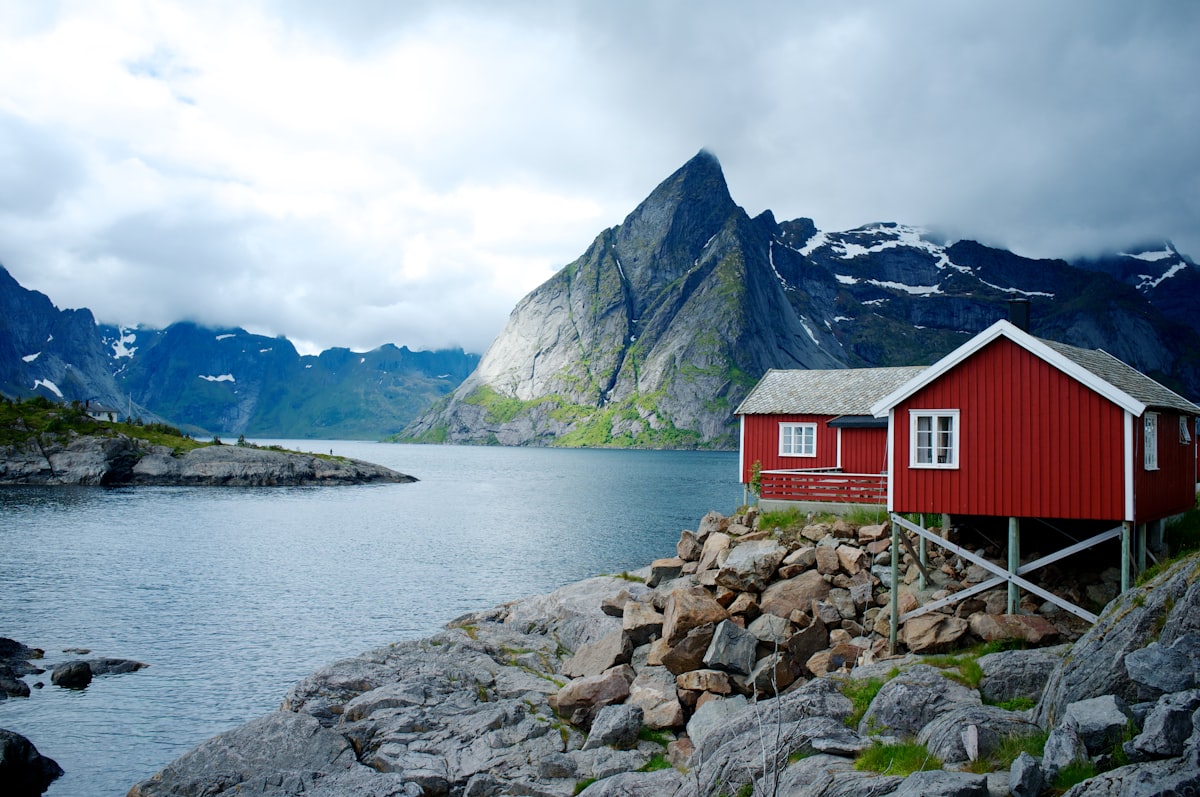
The number everyone is quoting this summer is 35 percent. Bookings to Norway, Finland, and Iceland up 35 percent year over year, the coolcation surge, the great migration of the European holiday from the sunburned south to the cool north. I do this for a living, and a suspiciously clean round number always makes me want to know who is selling it. So I traced it. The 35 percent is Sixt. The car rental company. It lives in a consumer travel-trends article on Sixt's own site, which lists Scandinavia among its picks for the year and forecasts "an expected increase of up to 35% in 2026." Euronews surfaced it for a wider audience on the twenty-fourth of March, in the phrasing everyone then copied: "travel to Scandinavia is expected to surge up to 35% in 2026, mainly driven by the ongoing popularity of coolcations." Expected to. Up to. A projection in a marketing roundup from a firm that rents you a Volvo at the airport, not a count of bookings from a tourism ministry. To be fair to Sixt, it never dressed the number as anything more; the inflation happened downstream, where "up to 35 percent, expected" hardened into "up 35 percent, booked."
Chase it further and it gets worse. Some of the pieces repeating the figure attribute it to a "Visit Scandinavia year-end tourism report." A Grey Journal coolcation roundup states it in so many words: in February 2026, it says, "Visit Scandinavia published its year-end tourism report," and bookings to Norway, Finland, and Iceland "had surged 35% year-over-year, with 12 million additional visitors projected." The trouble is that the report does not exist, because the organization that supposedly published it does not exist in that form. Bodies trade under names like it, a government-backed Scandinavian Tourist Board that markets Denmark and Norway abroad as "Go Scandinavia," a visitscandinavia.net travel guide, but none of them is an official "Visit Scandinavia" issuing a year-end report, and two of the three countries in the headline, Finland and Iceland, are not in Scandinavia at all. They are Nordic. The most authoritative-sounding source for the summer's biggest travel story is a citation to a body nobody can produce.
So let me do the thing the trend pieces skip, which is separate what is real from what is sold to you. There is a real story here, and it is sturdier than the fake-precise one.
The pull north is real, if smaller than the headline
Start with the heat, the part nobody had to invent. Last summer, 2025, was the fourth-warmest on record for the continent, according to the EU's Copernicus climate service, with the west and south running hot and dry. This June was worse, and it was 2026's own record, not last year's carried forward: Copernicus logged western Europe's hottest June on record, an average of 20.74 degrees Celsius, 3.06 degrees above the 1991-to-2020 norm, surpassing the mark June 2025 had set only the year before. On the eighth of July the Fabra Observatory in Barcelona, a World Meteorological Organization station with more than a century of readings, hit 40.5 degrees, its highest ever. The World Health Organization counted more than 1,300 excess deaths across Europe in the week from the twenty-first of June, and its director-general, Tedros Adhanom Ghebreyesus, said European "homes, workplaces and schools were not built for these temperatures." A rapid analysis by World Weather Attribution called the heatwave "virtually impossible" without climate change. None of that is a marketing angle. It is the pressure underneath everything else, and it builds every summer, which is what makes a durable shift plausible.
Now the northward demand, where the primary numbers are solid, just smaller and more honest than 35 percent. Statistics Norway logged 40.6 million guest nights in 2025, the first year the country cleared forty million, up 5.2 percent, with foreign guest nights up 14 percent to an all-time high of 14.2 million. Sweden had its strongest summer on record, 30.8 million guest nights between June and August on the count of Tillvaxtverket, its growth agency, with foreign stays up 8.8 percent and American visitors up 58 percent against 2019. Statistics Denmark reported the country's highest annual total ever, close to 66 million. Three neighbors, three records, all pointing north and up. SAS, the airline, is betting the same way, with a 20 percent seat-capacity increase out of Copenhagen and its largest summer schedule ever, nine new routes. Note that capacity is seats, not bookings: the airline is wagering on demand, not measuring it, and in the retelling the two blur easily. The demand SAS actually measured, its passenger volumes to Scandinavian destinations, grew more than 10 percent year over year. Real, and a third the size of the headline.
Paul Verhagen, SAS's chief commercial officer, said the useful thing in the airline's 2026 travel-trends release: "What we're seeing is a shift in how people travel, rather than a shift away from other destinations. Many are adding Scandinavian experiences alongside traditional sun and city trips." Adding, not replacing. That one word is where the "south is collapsing" story falls apart.
Santorini emptied because the ground shook, not because Rome was warm
The collapse is mostly fiction. The trend pieces pair the northern surge with Santorini and the Amalfi Coast posting their first booking declines in a decade, heat driving travelers off the Mediterranean. Santorini did drop. Kathimerini reported reservations running about 23 percent below the prior year in early March; by June, Yannis Paraschis, president of the Greek tourism confederation SETE, said airline seats to the island were down 26 percent year to date and forecast full-season losses of 10 to 15 percent. The research institute INSETE later put the actual fall in international air arrivals near 19 percent. But that was the earthquakes. A seismic swarm shook Santorini in February 2025, tens of thousands of tremors, a state of emergency, residents evacuated. People canceled because the ground was moving, not because Rome was warm, and Greece as a whole kept setting records the same year. One frightened island inside a growing country is a blip with a geological cause, not evidence the south is emptying. For the Amalfi "first decline in a decade," I found no primary figure at all. Treat it as an aggregator's flourish until someone produces the data.
So: structural shift or hot-summer blip? Both, split down the middle. The pull north is structural. Three straight years of records, real capacity going in, a climate signal that worsens annually, and, crucially, growth that adds rather than swaps. That does not reverse when one August turns mild. But the specific viral shape of the story, the 35 percent, the decade-first southern crash, the heat-drove-them-off-Santorini causation, is a hot-summer blip dressed as a structural one, stitched from a rental firm's forecast, a phantom tourism report, and an earthquake filed under weather.
One border, three currencies, and you book by April
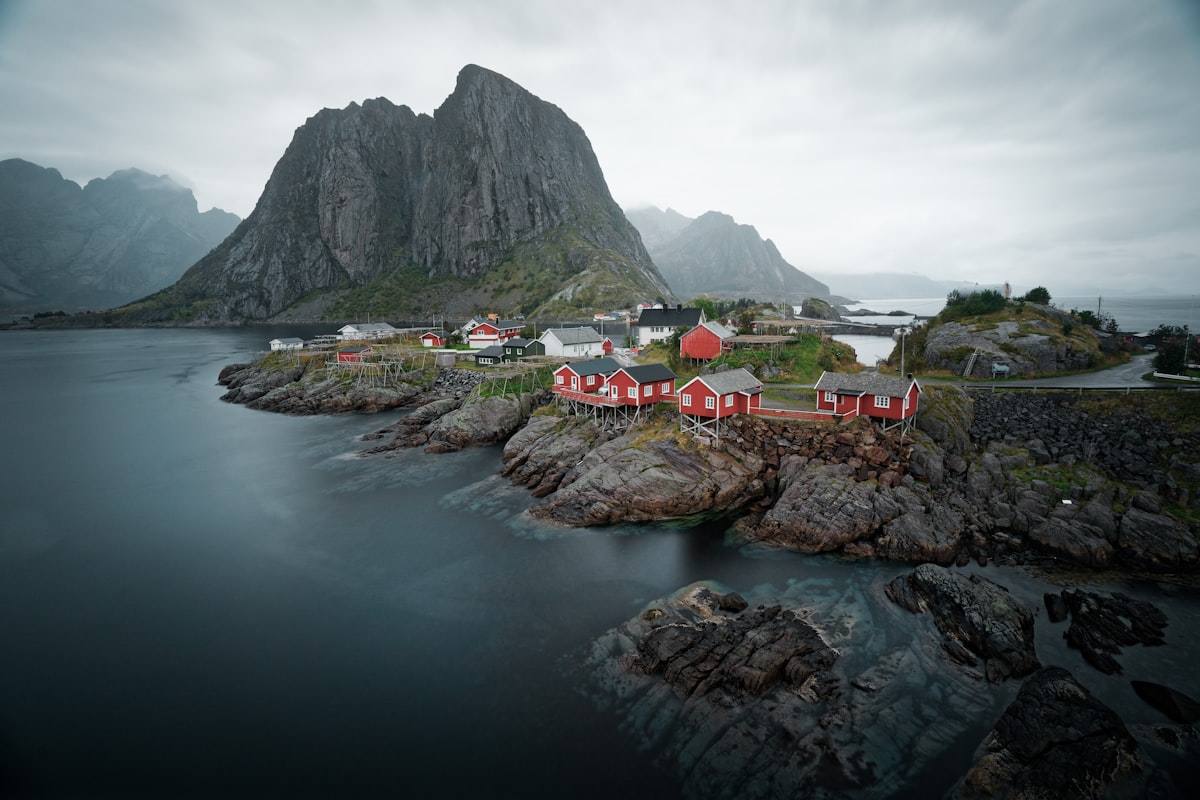
Here is what the trend pieces get right, so book it. The three countries all sit inside the Schengen area, which for a traveler makes them effectively one border: one entry, no passport checks between them, a single trip across the top of the map. What they are not is one currency. Finland runs on the euro, Norway on the krone, Iceland on the krona, so you carry three wallets on one itinerary. And near the solstice at these latitudes the sun barely sets, which is the actual product on sale, a usable nine o'clock evening, and also the thing that will ruin your sleep if the room has no real curtains. The surge, whatever its true size, is real enough that Lofoten and Reykjavik fill months out. For July or August, book by April.
The plane is not green because the destination is cold
One thing the coolcation pitch will not tell you, and I cannot let it pass: these are sold as the low-carbon choice while the largest carbon cost of the whole trip is getting to them. Once you are there, Nordic travel is about as clean as Europe offers, because the grid that runs the trains is far lower in carbon than the European average. But almost nobody arrives by train, since from central Europe it is days, and Iceland has no train at all, only a weekly ferry from Denmark by way of the Faroes that eats two days each way and is not itself clean. So the honest footprint of a coolcation is dominated by the flight it is supposedly the virtuous alternative to. I have not flown since 2018 and I still cannot solve that for you; I can only refuse to pretend it is solved. The industry's answer is sustainable aviation fuel, and it is worth knowing where that actually stands: ReFuelEU Aviation is binding law, not a proposal, and it requires 2 percent SAF in the fuel supply now, rising to 6 percent in 2030 and 70 percent by 2050. The near term is the problem. On the EU aviation regulator's own 2024 reference prices, SAF ran about three times the price of kerosene, and it made up well under 1 percent of the fuel actually burned. Take the coolcation. Just do not tell yourself the plane was green because the destination was cold.