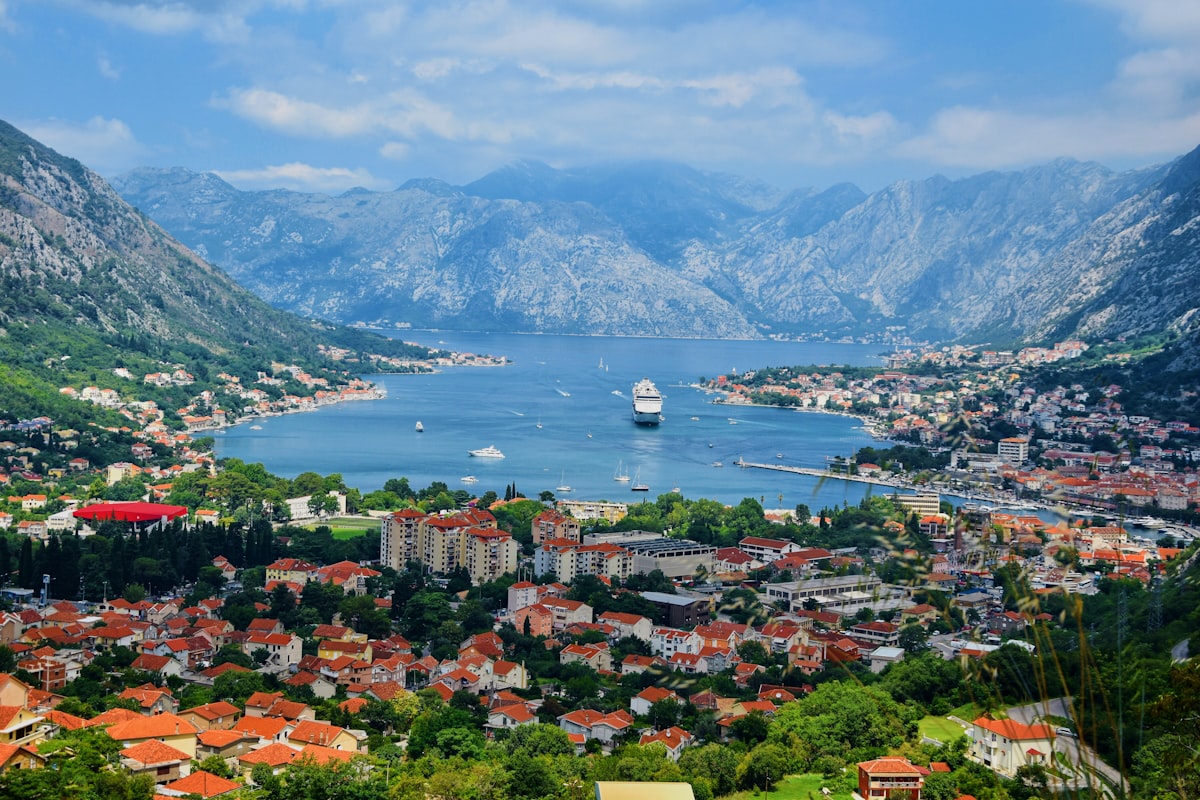
The stone stairs up to San Giovanni are already warm at eight, and the man who rents walking sticks at the lower gate has not unlocked his box yet; for an hour the fortress above Kotor belongs to whoever climbed early. Below, the bay holds the town the way it has since the Venetians walled it, Cattaro on the old maps, a port that answered to Venice and then to Vienna and never once to Dubrovnik, 90 kilometers up the same coast. This summer a great many people will arrive here having been told it is a Dubrovnik they can afford.
That is what the word does. "Destination dupe" is a shopping term, lifted from the habit of naming a cheaper lipstick that passes for the expensive one; Expedia ported it to travel in late 2023, and by its own survey one in three travelers has since booked a place chosen against another place. The frame arrives before you do. You climb toward Kotor already grading it, counting what it lacks against a town it was never trying to be.
Take Kotor as the case and the rest as the pattern. The savings are real, and smaller than the pitch. cozycozy, an accommodation price-comparison site, put Kotor's 2026 median room rate near 83 euros a night against Dubrovnik's 103, a discount of roughly a fifth. You are not mostly buying a cheaper room. You are buying space: a walled town Dubrovnik's crowds no longer permit its own residents. On the Albanian coast the gap is wider and the reason plainer. Ksamil runs around 59 euros a night against Mykonos at 131, a cut of more than half, because the road to it is younger than the people photographing it. Albania took 3.7 million foreign visitors between January and May, up 8.2 percent on the year, by the national statistics office INSTAT, on the back of budget airline bases at Tirana and a tunnel through the Llogara pass, opened in 2024, that shortened the last coastal stretch south.
Which is the honest ledger. What you gain is price, quiet, and the earlier phase of a place, before it has finished arranging itself for you. What you give up is the arranging. The Riviera has no working coastal airport this season: a Vlora route was announced for June and did not fly, so the plan is Tirana and a long drive, the tavernas still outnumbering the beach clubs at the far end of it. Ljubljana, everyone's Prague without the tour groups, is calm not because it dialed Prague down but because it is a small Habsburg river town that was never loud; the bridges and market colonnade the architect Joze Plecnik gave it are the work of a place being itself, and you will find fewer late trains and fewer people who need your English. The polish you are skipping was paid for by the crowds you came to escape.
And the frame has a clock in it. Albania's own boom is testing its water: The Economist has reported inland villages losing supply as it is piped to the coast, the American Chamber of Commerce in Albania warns that shortages and pollution threaten the growth itself, and the government has begun pulling Ksamil and Dhermi beaches back from private operators, the prime minister talking of beaches that have to be healed. Santorini, the original, now caps cruise arrivals at 8,000 a day under its local port authority, the Municipal Port Fund of Thira. The dupe is not a kind of place. It is a stage every one of these coasts passes through on the way to becoming the thing it was standing in for, and the honest version of the tip is that you are not beating the crowd so much as arriving a few seasons ahead of it.
So go, but go for Kotor. The bay was an edge of two empires and knows how to be looked at; it does not need to be a lesser anything to be worth the climb. The man with the walking sticks will be open by nine, and by then the first tour boat is already crossing the water toward the town.