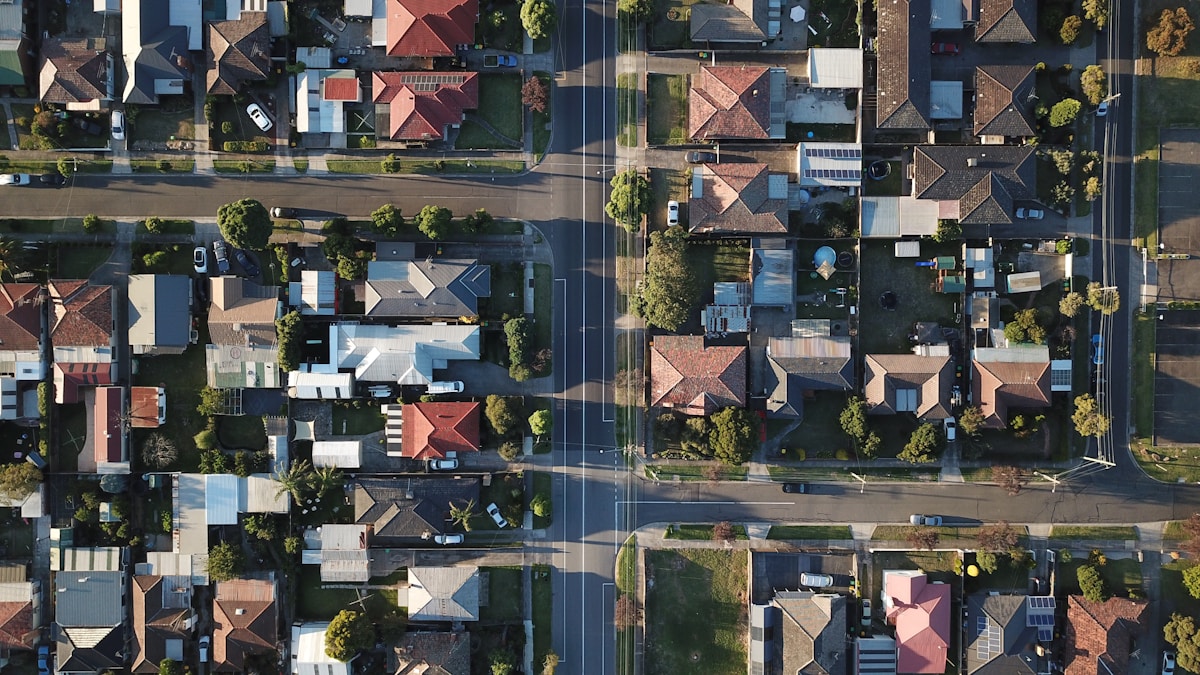
In 2023, 18 percent of Americans between the ages of 25 and 34 were living in a parent's home. That is Pew Research Center's number, drawn from the Census Bureau's American Community Survey, and it is the figure everyone reaches for when they want to say something about a generation that will not launch. The American Psychological Association, citing Census data, reports a comparable share at 11 percent in 2005. So the room your parents kept for you has gone from an exception to a fact of the decade, and the culture has spent the intervening years arguing about whose fault that is.
Psychology has an answer, and it is a generous one. In 2000, the developmental researcher Jeffrey Jensen Arnett, now at Clark University, gave the stretched twenties a name: emerging adulthood. Not adolescence, not settled adulthood, but a distinct stage with its own features, identity exploration, instability, a feeling of being in between, and, tellingly, a sense of open possibility. "This demographic space has opened up where people are less dependent on their parents but have not yet entered the settled roles of adult life," Arnett told the APA's Monitor on Psychology this spring, "making the 20s different than they were before." That article is the source of every psychologist I quote here. The frame has spread, though it is not settled. Nancy Hill, of Harvard, told the same magazine that "calling this a developmental stage implies a universality or normalcy that we should all experience," and cast the long, exploratory version of the twenties instead as "largely a product of the residential college experience, an opportunity available to a small subset of the population." Hold that objection. On the generous reading, a generation is not failing to grow up. It is growing up along a longer runway.
I want to believe this, and I distrust how much I want to. The reframe is humane where the older story was a sermon, and its best version, from Abby Goldstein at the University of Toronto, moves the definition of adulthood off the milestones entirely. "Rather than relying on milestones like marriage and parenthood to define adulthood, emerging adulthood focuses on developing capacities," she told the APA, "things like emotion regulation, tolerating ambiguity, and exercising self-restraint in high-stress situations." That is a kinder yardstick than a wedding and a mortgage. It is also, read a certain way, a yardstick that asks a broke twenty-eight-year-old to regulate her emotions about a lease she cannot sign.
Living at home swings tenfold from city to city
Hill's objection has teeth, and the geography is where I feel it. If emerging adulthood were a developmental stage, a thing the human twenties simply became, it would not vary more than tenfold depending on which metro you were born near. It does. Pew's same analysis finds the share of 25-to-34-year-olds at home running from about 3 percent in college towns like Ithaca, New York, and Lincoln, Nebraska, to 33 percent in the Vallejo metro in the San Francisco Bay Area and the Oxnard-Thousand Oaks-Ventura metro northwest of Los Angeles. Pew is careful about what moves that spread, and it is not the obvious thing: across metros the share did not track median rent, but skewed toward areas with more Hispanic, Black, and Asian young adults. So the map is not a simple rent map. It is still a map, and that is the point. A universal phase of the human life course does not bend this hard to place, demography, and local economy. Something structural is doing the bending.
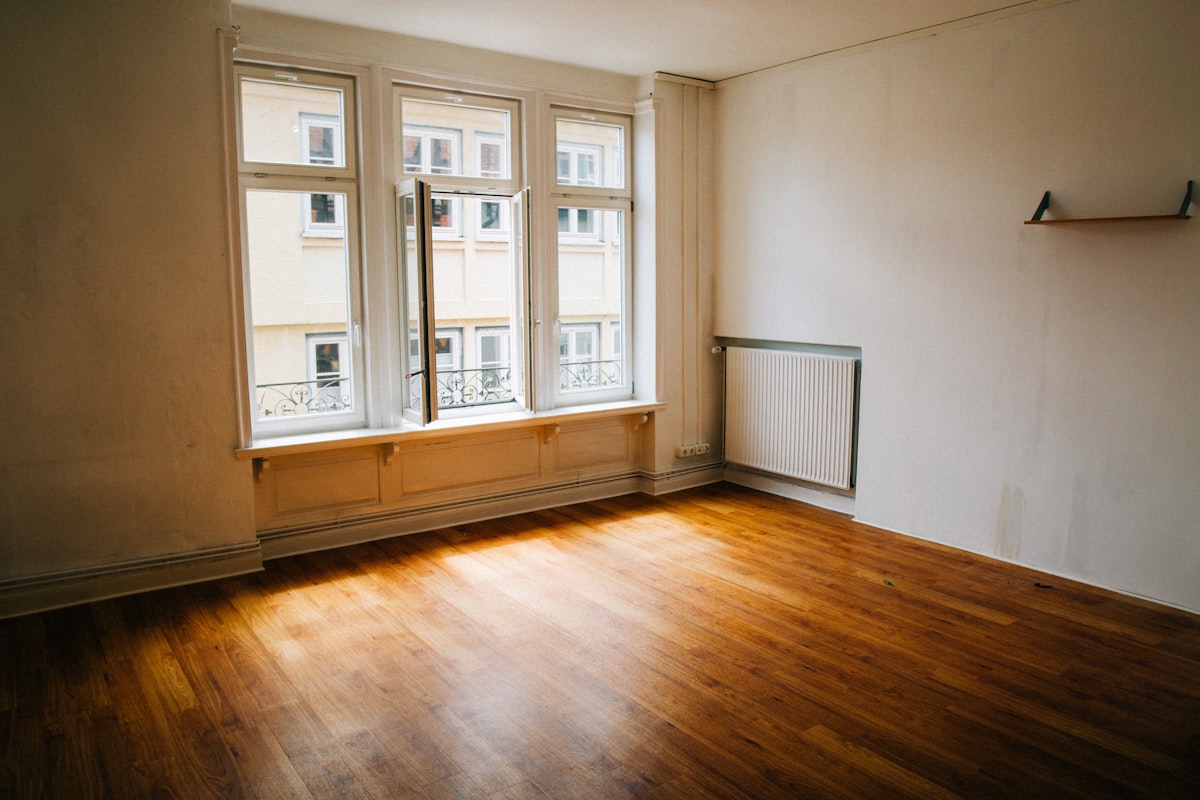
A starter home out of reach, the first rung gone
So look at the economics the psychology is sitting on. Harvard's Joint Center for Housing Studies reports that in 2024 the monthly payment on a median-priced home, on the terms a first-time buyer actually gets, reached $2,570. Carrying it takes an income of at least $126,700, and only 6 million of the country's roughly 46 million renters clear that bar. The median first-time buyer is now the oldest on record. Ownership, the classic milestone, has quietly become a question of who your parents are.
Renting is no escape hatch. Half of all American renters, 22.6 million households, spend more than 30 percent of their income on housing, and 12.1 million spend more than half. The runway is not a metaphor. It is priced by the square foot.
The other end, the entry into work, has buckled in the same window. The Federal Reserve Bank of New York puts unemployment among recent college graduates near 5.7 percent in early 2026, above the 4.2 percent rate for the workforce as a whole. That is the old bargain running backward: the degree that used to buy a head start now correlates with a worse starting number. Underemployment among those graduates sits above 41 percent, meaning four in ten hold jobs that never asked for their degree. The Economic Policy Institute traces the young-graduate rate from a floor of 4.0 percent in mid-2023 to 5.3 percent this spring, climbing faster than the overall rate's rise to 4.3 percent. EPI is careful about the mechanism: this is not a wave of layoffs but a hiring freeze, a depressed rate of new hires, employers and workers sitting still through the uncertainty. Nobody is being pushed out. The door is simply not opening for the people trying to come in.
The adults at home are pooling rent, not failing to leave
None of which describes idleness, whatever the phrase "living with parents" conjures. Pew's survey work finds that 72 percent of young adults at home contribute financially, 65 percent to household expenses and 46 percent to the rent or the mortgage. These are not children who failed to leave. They are adults pooling a household against a budget that does not otherwise close. What looks from the outside like arrested development is, from the inside, a rational allocation of a scarce resource, which is a roof.
I filed a correction once, in public, for betting that remote work would loosen class and flatten geography, and it did the opposite. So I offer this next part with the caveat worn on the outside. Pew is a snapshot, not a film, and the honest version of the data is not a clean line upward: the share of young adults at home actually climbed until about 2017 and has drifted down since. The demographic curve wobbles. The through-line underneath it, the cost of a lease and the difficulty of a first real job, does not. When a single number moves for two reasons at once, believe the structural one.
The loneliness is real, and it is done to them, not carried by them
Which leaves the part of the frame I cannot dismiss, because the researchers did not invent it. A 2021 meta-analysis in Psychological Bulletin by Susanne Buecker and colleagues pooled 124,855 emerging adults across studies run from 1976 to 2019, more than four decades, and found loneliness rising steadily with each passing year, a meaningful rise over the span (about half a standard deviation). The authors are careful with their own result: they say the term "loneliness epidemic" itself "seems exaggerated," even as they warn that emerging adults should not be overlooked. The APA pairs that with National Institute of Mental Health figures showing 36.2 percent of 18-to-25-year-olds reporting any mental illness against 23.1 percent of adults overall. Arnett calls the identity work of the twenties genuinely lonely. Karla Vermeulen, at SUNY New Paltz, told the same APA article that these lives are "vastly more complicated than any previous generation's lives have been at this age." The interior weather is real. What I would not concede is the sequence of blame that usually follows, in which the complication is treated as a thing young people carry rather than a thing done to them.
The reframe from milestones to capacities is the most decent idea in this whole literature, and I keep circling the moment it could curdle. Emotion regulation, tolerance of ambiguity, self-restraint under stress: those are the exact virtues the self-optimization industry has spent a decade selling back to people as personal projects. The danger is that "emerging adulthood" becomes another way to hand someone a private curriculum for a public shortage, a set of skills to practice while the rent and the hiring freeze stay off the table. Arnett's stage is defined, above all, by a sense of possibility. The economy it is being lived in rations exactly that. I do not know how a person is supposed to feel optimistic on schedule, and I notice that nobody making the case for the stage has told me who is supposed to build the runway.