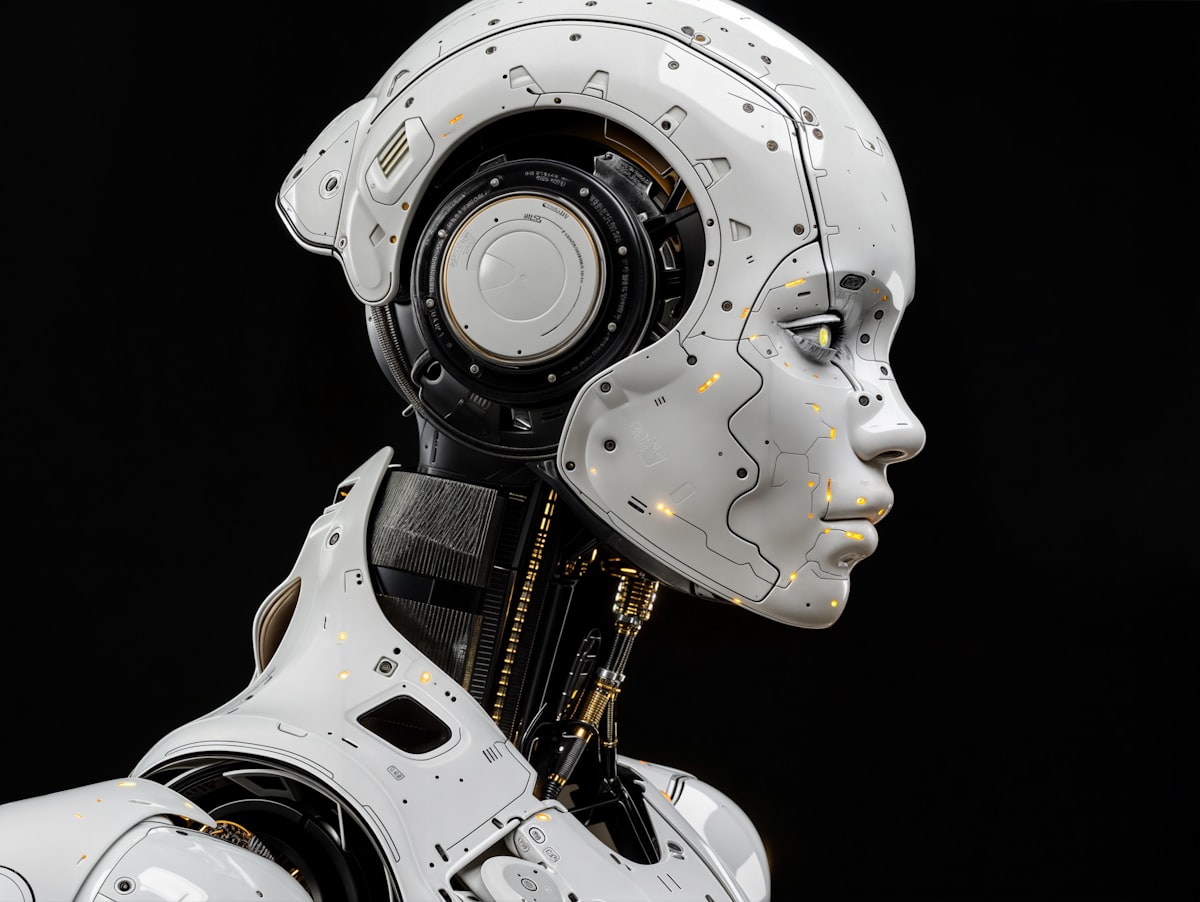
The ad shows a soft, knit-wrapped robot folding your laundry while you sip coffee. The reality, when a Wall Street Journal columnist spent a day with it, was a person in another room wearing a virtual reality headset, working two motion controllers, moving the robot's hands for it. Joanna Stern's video has an honest title: "I Tried the First Humanoid Home Robot. It Got Weird." In her run, NEO did not finish a single hard task on its own. A human did them, slowly, through its eyes.
This is the thing about 1X's NEO: a compliment to the company's candor and a warning to your wallet. Per Engadget, you can put $200 down today; it costs $20,000 outright or $499 a month, and Fortune notes the subscription carries a six-month minimum. The Robot Report says the first units reach U.S. homes this year. It is billed as the world's first consumer-ready humanoid. For now, it is a very expensive way to volunteer your house as a training set.
Here is what NEO does by itself at launch, per Engadget: it opens the door, fetches a thing you ask for, turns the lights off at night. That is the autonomous list. It is a real robot, Fortune reports, five foot six and about 66 pounds, deliberately soft and slow so it does not hurt anyone, with roughly four hours of battery, not a full day on one charge. Everything past that short list goes to what 1X calls Expert Mode, which, as Road to VR describes, is the polite name for a company employee in a Quest 3 headset climbing into the robot's body and doing the work by hand while its cameras stream what they see.
The company is unusually straight about why. In 1X's world-model tests, as reported by Mike Kalil, NEO steamed a shirt successfully about 95 percent of the time, grabbed a bag of chips 80 percent of the time, and opened a sliding door 75 percent of the time, the numbers falling as tasks got fiddlier. Those are lab figures, not your kitchen. CEO Bernt Bornich told the Journal, plainly, "If we don't have your data, we can't make the product better." He framed it as a deal the early buyer signs: "If you buy this product, it is because you're okay with that social contract." Call it what it is, a data-collection play: a stranger sees inside your home so the machine can eventually learn to do this without one.
To 1X's credit, the privacy controls are more than a shrug. You set no-go zones the robot cannot enter. You can blur every face in the home so the operator cannot see who you are. A teleoperator cannot take control without your approval, and you schedule when they are allowed in. That is a genuine attempt, and it is also the tell. You do not design elaborate consent flows for a fully autonomous appliance. You design them for a video feed with a human on the other end.
So run it through the questions I run everything through. What does it cost you in money: $20,000, or a subscription that is a car payment, for a device whose headline features are performed by a person you also pay for. What does it cost you in privacy: a camera on legs streaming to an operator you will never meet, mitigated by controls you must trust and maintain. What does it cost you in years: NEO gets better only if enough early buyers let it watch them live, so you are funding, and populating, a beta. 1X has begun full-scale production and, Forbes reports, promised to ship before year's end, so that beta is about to move into real houses.
The honest counterpoint is Tesla's Optimus, and it makes 1X look forthright. As of mid-year, by the reporting, you cannot buy an Optimus: no preorder, no deposit, no published price, no ship date. The mid-2026 milestone is production for Tesla's own factories, not a robot at your door, and that same reporting puts public sales no earlier than end of 2027. Set against that, NEO's awkward transparency is at least a product you can hold to account.
My advice is the boring kind, which is usually the right kind. Do not buy the first one. Not because NEO is a fraud, it plainly is not, but because you would be paying the early-adopter premium to do unpaid QA on a stranger's eyes in your hallway. In a couple of years the robot will either fold the laundry itself or it quietly still will not, and you will know by watching, not by spending. And do keep an eye on what they sell you next: the accessory here is the subscription, and subscriptions have a way of outliving the thing you bought.