Here is the sentence you will meet first, because it is the one that sells: one night of sleep data can now forecast more than a hundred diseases. It is true enough to be dangerous. In January, Stanford Medicine researchers published a model called SleepFM in Nature Medicine, and from a single night of monitored sleep it ranks a person's future risk across 130 conditions. Somewhere between that paper and the ring on your finger, a $300 to $500 device is going to inherit that headline. This piece is about the distance between those two things, because the distance is the whole story.
Stanford's real model ranks disease from one night
Start with what the researchers actually built, because it is real work and it deserves to be described accurately before anyone borrows it. SleepFM is a foundation model, the same broad idea as the systems behind ChatGPT, except it was trained on biological signals instead of text. The team, led by co-senior authors Emmanuel Mignot and James Zou at Stanford with co-lead authors Rahul Thapa and Magnus Ruud Kjaer, fed it over 585,000 hours of polysomnography from about 65,000 people. Polysomnography is the full sleep-lab study: electrodes on the scalp reading brain waves, plus heart signals, muscle activity, airflow, pulse, eye movement, leg movement. They cut each recording into five-second segments and, as Zou told Stanford Medicine in the announcement, taught the model "the language of sleep." Then, because roughly 35,000 of those Stanford patients had their sleep studies linked to up to 25 years of medical records, they could ask the model to guess what came next.
The results are genuinely striking. From one night, SleepFM ranked 130 conditions with a concordance index of at least 0.75: all-cause mortality at 0.84, dementia at 0.85, Parkinson's and prostate cancer at 0.89, heart attack at 0.81, stroke at 0.78. I am not here to wave that away. It is a serious finding, honestly reported, and the authors caveat it more carefully than the press will.
The number is a ranking, not your risk
Let me do the thing I always do, which is follow the number and ask where the evidence stops. The concordance index is a ranking score. Zou defined it in that same announcement: "For all possible pairs of individuals, the model gives a ranking of who's more likely to experience an event, a heart attack, for instance, earlier. A C-index of 0.8 means that 80% of the time, the model's prediction is concordant with what actually happened." Read that again. A C-index of 0.84 for death means that, handed two people, the model puts the one who dies sooner in the right order 84 percent of the time. It does not tell you your probability of anything. The paper reports discrimination, the ranking, and it does not report calibration, absolute risk, or positive predictive value. There is no number in it that says "your risk of this disease is X percent," and there is no number that says how often a high score is a false alarm. For a rare condition, where almost nobody in the room will ever develop it, a good ranking can still hand out far more frightening scores than there are actual cases. That is not a flaw the authors hid. It is simply where their evidence ends, and it ends well short of the sentence at the top of this page.
Then there is the question of who this model met. In their own words, the authors write that the dataset "consists primarily of patients referred for sleep studies due to suspected sleep disorders or other medical conditions," and that "this selection bias means our cohort is not representative of the general population." These are people who were already sick enough, or worried enough, to be wired up overnight in a clinic. You, lying in your own bed with a ring on, are exactly the person the model has not seen.
Your ring never recorded the channels that did the work
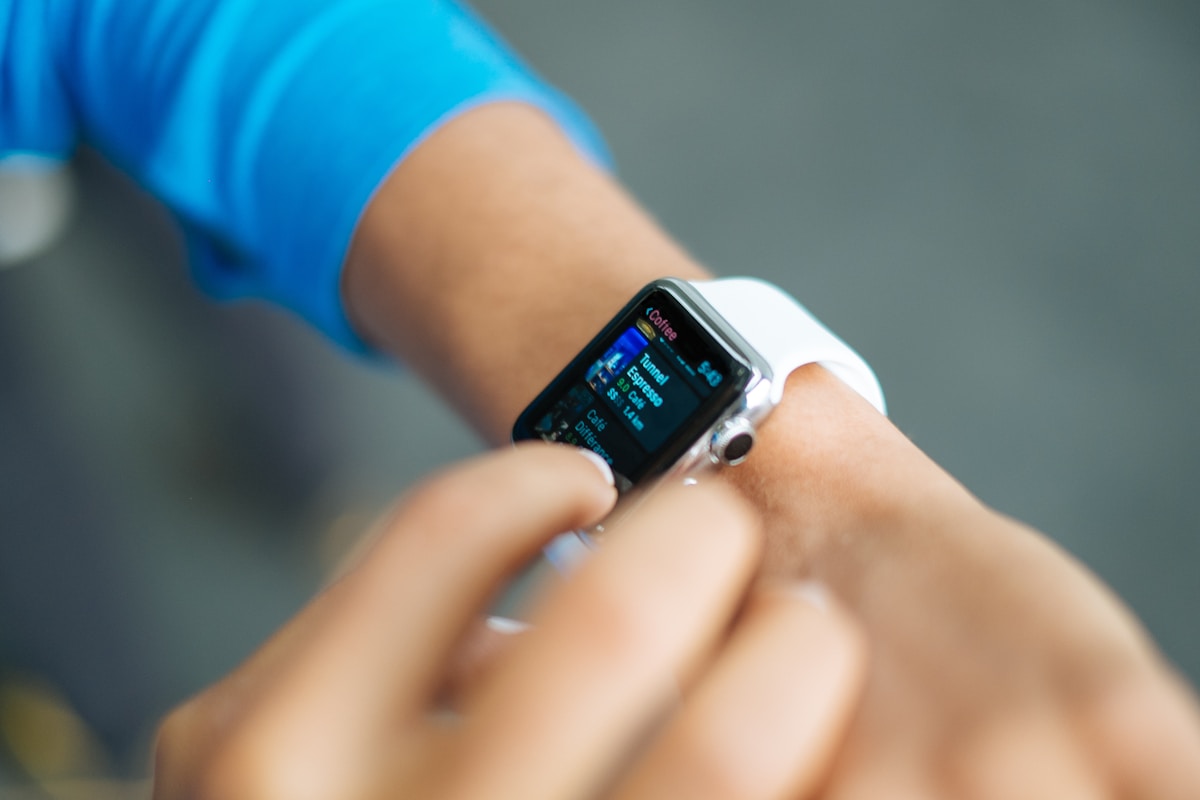
The ring is the part that should stop you. Every one of those 130 numbers came out of a full clinical montage, and Mignot was specific, in the same announcement, about what did the work: "The most information we got for predicting disease was by contrasting the different channels." Contrasting the channels. Your Oura, your Whoop, your Apple Watch does not have most of those channels. It does not read your brain waves at all. It infers sleep from pulse, movement, and temperature, and it is decent at that narrow job and mediocre at the rest. In an Oura-funded validation in Sensors, the ring reached a four-stage agreement with the lab of 0.65 on Cohen's kappa, which is a chance-corrected score that runs from 0 to 1, not a percentage. An independent 2025 study in SLEEP Advances that did not include Oura used a different ruler, raw stage-scoring accuracy, and reported figures from about 70 percent for Whoop down to 30 percent for the weakest device. The two numbers are not on the same scale, so do not read the ring's 0.65 as a losing 65 percent. What both literatures agree on is that every tracker tends to over-count sleep, calling quiet wakefulness "light sleep." These are useful gadgets for noticing that you slept badly all week. They are not sleep labs, and SleepFM was never shown to work on their data. The paper mentions wearables only in passing, as a "may offer opportunities" someday. That is a hope, not a product.
A risk score with no action, only a market
That leaves the last problem: what do you do with a risk score you did not ask for. Say the technology matured, the ring caught up, and a number arrived one morning telling you your dementia risk ranks in the top tier. There is no action attached to it. No drug, no protocol, no reassurance that it is even calibrated to you rather than to 35,000 sleep-clinic patients from 1999 to 2024. What there would be, reliably, is a market ready to sell you the supplement, the sleep stack, the membership tier that promises to move the number it cannot actually read. I wear a tracker. I take magnesium at night and I cannot fully defend it, and I know the small daily anxiety the device manufactures is its own kind of unwellness. So I will say the flat version and stop there. Stanford built something real and said honestly what it can and cannot do. The version that reaches you will keep the hundred diseases and quietly drop the sentence about selection bias, the missing calibration, and the channels your ring has never once recorded.