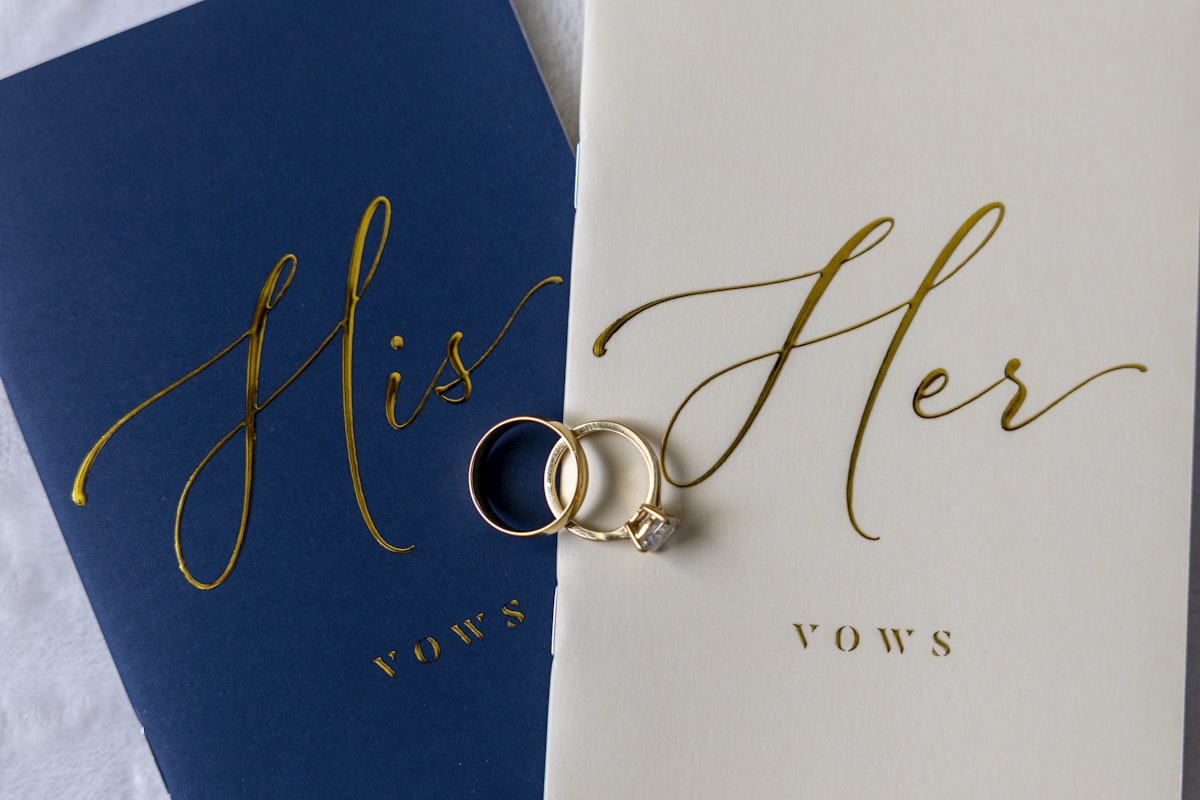
The case that crystallized this for me is not one I witnessed. It reached me the way it reached the researchers, at secondhand. In a widely shared Reddit post that the University of Kent psychologists cite in their new paper, a newlywed described feeling deeply hurt after discovering her husband had used ChatGPT to write his wedding vows. The shortcut takes all of five words, write me heartfelt wedding vows, and it lit a fire that is still burning across the internet. Her objection, the researchers were careful to note and so am I, was not that he used a machine. It was that he used it for that.
That distinction is the whole story, and it is more precise than the usual hand-wringing about robots and romance. We have quietly agreed on a border. On one side sits the machinery of a wedding, the timeline, the seating plan, the polite email to the caterer, and we will let a computer run all of it without shame. On the other side sit the vows, and there the same computer is treated as a small betrayal. The interesting question is not which side you fall on. It is why the line lands exactly where it does.
The numbers say the border is real and widely observed. Zola's 2026 First Look Report, drawn from more than 11,500 couples, found 54 percent using AI in some way to help plan their weddings, and 63 percent flatly against using it to write their vows. Zola's own Modern Wedding Etiquette guide does not hedge either: the vows are "the heart of the ceremony," and your guests want "your messy, imperfect, real voice, not a polished script generated by a bot." A wedding platform, note, telling couples to write worse sentences on purpose. That is how load-bearing the imperfection has become.
Why the same tool is thrifty in one column and shabby in the next is now a matter of published research, not just feeling. Psychologists at the University of Kent ran six pre-registered studies with 3,935 British participants, published in February in Computers in Human Behavior, and found a consistent penalty for outsourcing to AI: people judged the outsourcer as lazier and less competent. But the size of the penalty tracked the kind of task. Ask a chatbot for a recipe, a schedule, a tour of a city for a visiting friend, and observers barely blink. Ask it for a love letter, an apology, a marriage proposal, a set of vows, and the judgment turns to the parts of character that actually matter at an altar: warmth, morality, trustworthiness.
Dr. Scott Claessens, who worked on the study, put the mechanism in a single line. "People don't just judge what you produce, they judge how you produce it." His colleague Dr. Jim Everett was blunter about the stakes. Use AI "for these kind of social tasks that bind us together," he said, and "you risk being judged not only because you didn't put effort in, but because it makes people think you care less about the task and what it represents." The vow is not information to be transmitted. It is effort made visible, which is a definition of nearly every rite of passage worth attending.
I have been on the wrong side of a line like this once, and it taught me not to trust my first instinct. For years I ruled that a condolence not written by hand was no condolence at all, until a hospice nurse wrote to tell me the three-in-the-morning emails were what kept some of her families upright. I was confusing the medium with the act. So I want to be careful here not to make the opposite error, to pretend the tool is the sin. It is not. The sin the Kent study actually catches is the missing labor of feeling, and that is a different thing from the software.
Which is why the popular fix, "co-create, don't delegate, just be honest about it," is softer than it sounds. The comfort of that advice is that disclosure launders the machine. The study does not support that comfort. The penalty held even when the writing was genuinely good, and even when people openly admitted using AI as a collaborator. Being honest that a bot helped did not buy back the warmth. Transparency is a virtue, but it is not an alibi. What people are grading is not whether you had help. It is whether the caring was yours. Everett, one of the study's authors, put the same point without the hedge: "AI is no substitute for investing effort into our interpersonal relationships."
So here is the ruling, and it is narrower than the headlines. Hand the logistics to the machine with a clear conscience. A seating chart carries no love; solve it however you like, and spare yourself the martyrdom of doing by hand what a spreadsheet does better. Use the thing as a thesaurus, a nervous first-drafter, a way to find the word for a feeling you already own. What you may not do is let it do the feeling for you, because that is the one job at a wedding that does not transfer. The vow is the promise that you will show up as yourself, and you cannot make it in a voice you rented.
Keep this rule: the vows stay in your own hand, misspelled and over-long and yours. Bin this one: the idea that any tool, disclosed or not, can stand in for the effort of loving someone out loud in front of witnesses. That is the one job at a wedding that does not transfer, on the one afternoon whose entire purpose is to prove the effort was real.