The EU has rolled out two new systems at its external border, and almost every piece I read jams them together. One is already running and costs you nothing. The other will not switch on until later this year, will cost twenty euros when it does, and is already ringed by websites charging far more than that for it. Confuse the two and you hand your card to a scam site for something that is either free or not yet available.
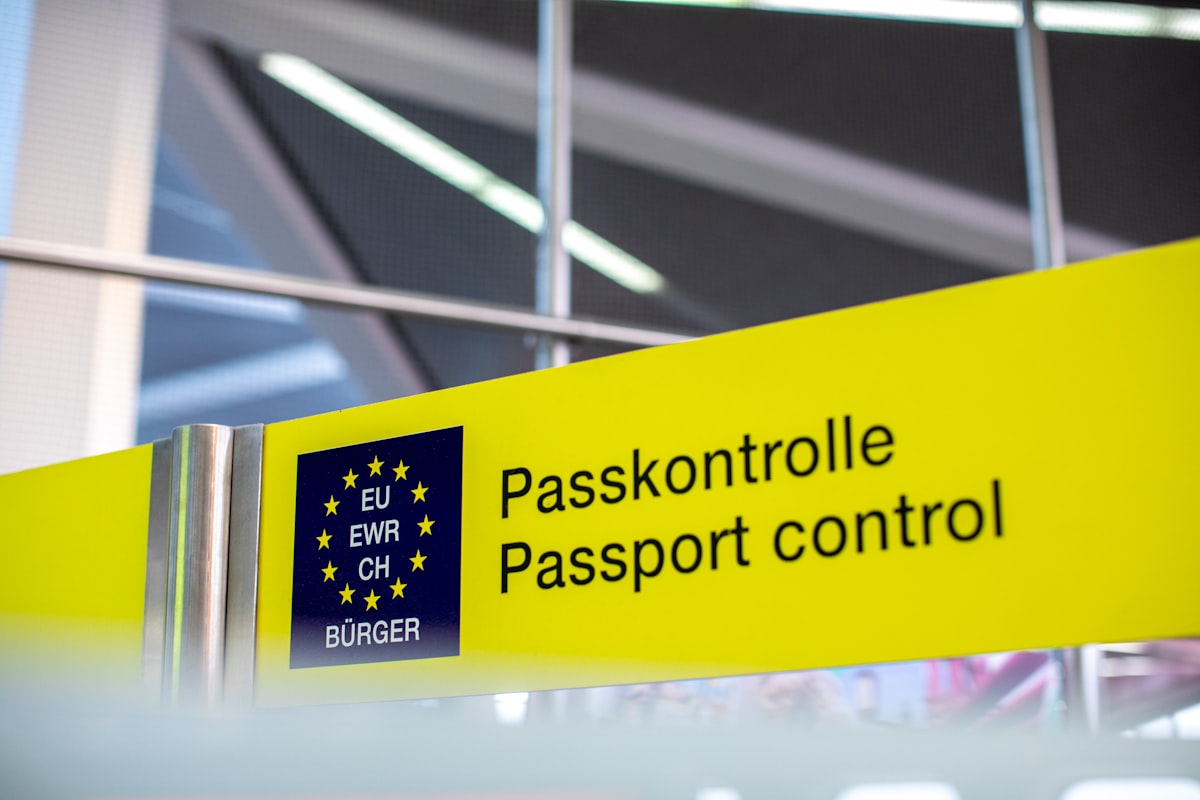
The live one is the Entry/Exit System, EES. It went fully operational on April 10, 2026, after a phased start that began October 12, 2025, and it now runs at the external borders of 29 European countries. There is nothing to apply for and nothing to buy. It replaces the ink passport stamp with a digital record of your entries, exits, and any refusals, and it registers your facial image, fingerprints, and passport data the first time you cross. That is it. If a website is charging you for EES, it is charging you for a thing that does not exist.
EES is a border procedure, so the friction lands at the border. The European Commission says the system logged over 45 million crossings and refused entry to more than 24,000 people in its first stretch, which tells you the machines are running and the queues are real. You can shave time off yours with the one official tool worth downloading: the free Travel to Europe app, built by Frontex, which lets you pre-load your passport chip and a facial photo before you get there. You can start building a journey up to seven days out, but you cannot submit it any earlier than 72 hours before you travel. Check that the publisher reads "European Union - Publications Office," because fake versions are already in the stores. Two caveats I will not soften. It needs a biometric passport with a chip, and your fingerprints still get taken in person at the booth, guard watching, app or no app. Country coverage is patchy while the rollout settles, so before you rely on it, check travel-europe.europa.eu/ees for whether your entry country is actually wired up.
Now the other one. ETIAS, the travel authorization, is not live. The EU has it slated for the last quarter of 2026 and has not fixed a date, so anyone quoting you a firm one is guessing. When it lands, it is a pre-trip authorization you apply for online: twenty euros, valid up to three years or until your passport expires, whichever comes first. Travelers under 18 and over 70 pay nothing but still need one. It covers unlimited short stays, the same 90-days-in-180 rule as everything else, and most approvals come back in minutes. It is not a visa and it does not guarantee entry; the guard at the border still decides.
Here is the part the shorthand flattens. It is not simply a "six-month grace period." As the legal advisories read the ETIAS Regulation, the start is staged in two phases of at least six months each. In the first, the transitional period, anyone can enter without an ETIAS as long as they meet the other conditions. In the second, only genuine first-time arrivals get that pass; if you have crossed before, you need the authorization or you are turned away. After roughly a year it is mandatory for everyone. And airlines are told to check from day one, which means the grace period is real on paper and unreliable in practice. Do not build a trip around it. Apply the day the portal opens.
Which brings us to the money, because that is where the trouble is. Frontex says it has counted more than 100 websites offering ETIAS "information," a number that roughly doubled in a year, and warns that some of them will take your data and your card and hand back nothing usable. By Frontex's account the markups run from fifty euros to over a hundred, with extremes near 178 for a twenty-euro form. There is no fast-track, no premium, no expedited ETIAS; every application goes through the same automated system, so any site selling speed is selling a lie.
So: one border system that is live and free, one that is coming and costs twenty euros, and a swarm of sites betting you cannot tell them apart. The tell is the domain, and it is the only one you need. Bookmark the two addresses that are real: travel-europe.europa.eu/ees for the system already checking you at the border, and travel-europe.europa.eu/etias for the one that will. The lookalikes that copy them are the ones standing between you and the border with their hand out.