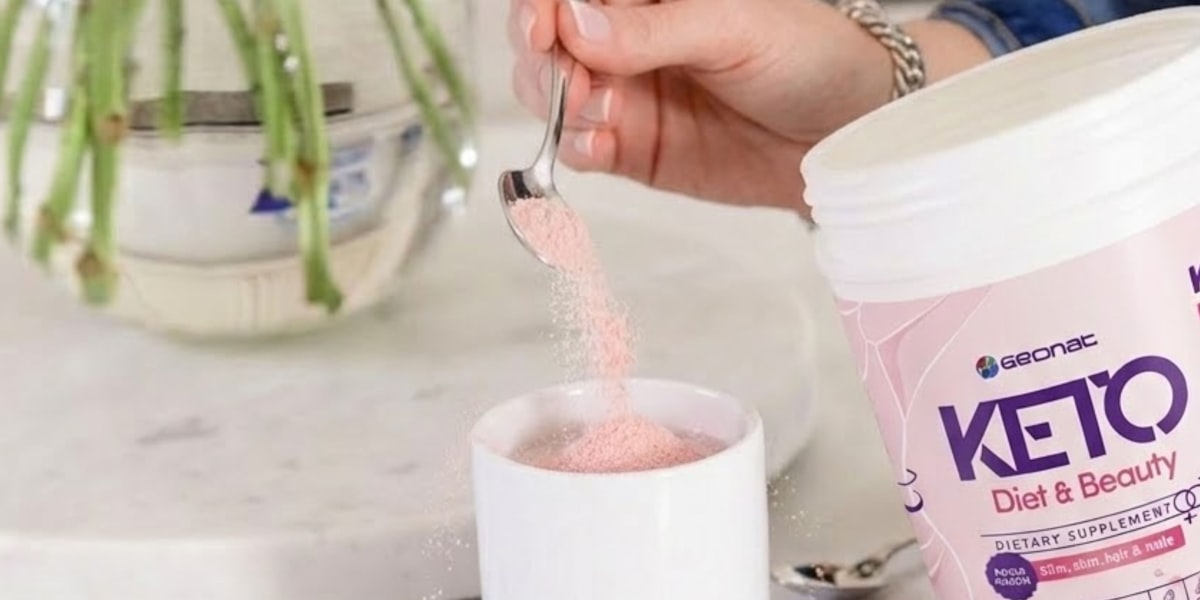
"A 20.1% increase in facial volume." That is IMAGE Skincare's headline result for VOL.U.LIFT, its $134 "GLP-1 4D Skin Rebound Complex," from a twelve-week company study on weight-loss patients, a number I read back to front for a living. Look at what it measures: the surface. A cream can hydrate, plump, and firm skin, and instruments read that as volume. What it cannot reach is the fat pad, and the volume an Ozempic face loses is fat.
That is the fastest-growing story in skincare: a "medical-grade" category built to sell back a face a drug, working exactly as intended, took away.
The hollowing is lost fat, not damaged skin
Start with the words. The term is Paul Jarrod Frank's, a Manhattan cosmetic dermatologist who says he coined it, and it reached the mainstream through a January 2023 New York Times piece by Alex Hawgood. His patients arrived thrilled to have lost weight and unsettled to look older. "This was due to the loss of volume in their face," he told CNN's Oscar Holland last year. Semaglutide, sold by Novo Nordisk as Ozempic for type 2 diabetes and Wegovy for obesity, and tirzepatide, sold by Eli Lilly as Mounjaro and Zepbound, are metabolic medicines. Ozempic was cleared for diabetes in 2017. People take them for blood sugar, for weight that threatens their hearts, for sleep apnea. The face is collateral.
The hollowing is not the drug attacking your skin. It is your face losing fat, as after bariatric surgery or a hard year of dieting. Your cheeks and temples are cushioned by fat pads; lose body fat fast and they deflate, and skin past 40 does not spring back. The American Society of Plastic Surgeons, the Cleveland Clinic, and a 2025 benefit-risk review in Dermatology and Therapy agree: this is volume loss, not a poison. That is the whole game: a serum works on the surface of skin, not the fat beneath it.
The serums arrived ahead of the evidence
The demand is real. By the American Society of Plastic Surgeons' counts, filler use in the United States roughly doubled between 2017 and 2023, to more than five million people, and facelifts rose eight percent between 2022 and 2023. Frank told CNN that more than a fifth of his patients now take a GLP-1. The serums followed: Julius Few's DermaReverse, $300 for 30 milliliters; IMAGE's VOL.U.LIFT; SkinCeuticals' $185 A.G.E. Interrupter Ultra Serum, a general anti-ager repointed at the GLP-1 buyer.
Some of the marketing leans on a genuinely new idea. A 2025 paper in Aesthetic Surgery Journal Open Forum proposes that GLP-1 drugs might thin skin directly, not only by removing fat, by slowing the skin's building-block cells, the keratinocytes and fibroblasts, "similar to" what systemic steroids do. If it held up, it would be a real drug-on-skin story. But read the asterisk. The authors call it a hypothesis, by their own account the first steroid analogy anyone has drawn. The study ran seven patients for 42 days, with no biopsy to confirm thinning. And the serum it tested, GLPSGLT, sold to consumers as DermaReverse, is made by Aforé LLC, of which the paper's senior author, Julius Few, is a disclosed part owner. That does not make the idea wrong, only a reason not to buy the bottle yet.
The real drivers are menopause and muscle loss
Two things the category leaves out change the picture. The first is menopause. The women most visibly hit by Ozempic face are often already on the collagen cliff: a body of work by the gynecologist Mark Brincat and colleagues, beginning with a 1987 paper in Obstetrics and Gynecology, is the source of the figure that women lose roughly 30 percent of skin collagen in the first five years after menopause, then about 2 percent a year. That pairing is assembled from years of studies, not one line, and is observational, so hold it loosely. Rapid fat loss drops that hollowing onto a collagen scaffold estrogen has already stopped maintaining. Two mechanisms, one face, and the serum is sold against only the visible half.
The second is muscle. A meaningful share of what these drugs strip is not fat but lean tissue. A body-composition substudy of the STEP 1 semaglutide trial, in the Journal of the Endocrine Society, found total fat mass down about 19 percent and lean mass about 10 percent over 68 weeks; a 2024 review in Diabetes, Obesity and Metabolism, led by the cardiologist Ian Neeland, put the lean share of the weight lost near 45 percent. Lean mass is not only muscle, it includes water and organ tissue, and body composition still improved because fat fell faster. But the muscle question is why the serious answer to Ozempic face was never a cream: resistance training and protein, which help preserve lean tissue during weight loss, and, for volume, filler or fat transfer that puts mass back.
Do not quit a heart drug over your face
The aesthetic-medicine literature raises the worry that a gaunt reflection could push someone off a drug their heart or their blood sugar needs. It is a worry more than a documented pattern: the peer-reviewed reviews that mention quitting advise against it, the visible response has been a filler appointment rather than a canceled prescription, and Aoife Egan, a Mayo Clinic endocrinologist who has prescribed these drugs for years, told Mayo Clinic Press she has never had a patient express concern about facial fat loss. Still, the stake is real. Stopping a cardiometabolic medicine because you dislike your new cheekbones would be an expensive answer to a distressing thing, and no one should be nudged toward that trade at a beauty counter.
So do the math the box will not. What these serums measure is real: the surface plumping and firmness a good retinoid, peptide, and antioxidant have always delivered, which is what they are. What they add, for the markup, is "GLP-1" on the label. Buy the actives if you want them. Just know that the volume on the front of the bottle is surface volume, and the fat pad a GLP-1 drug empties sits deeper than any cream reaches.