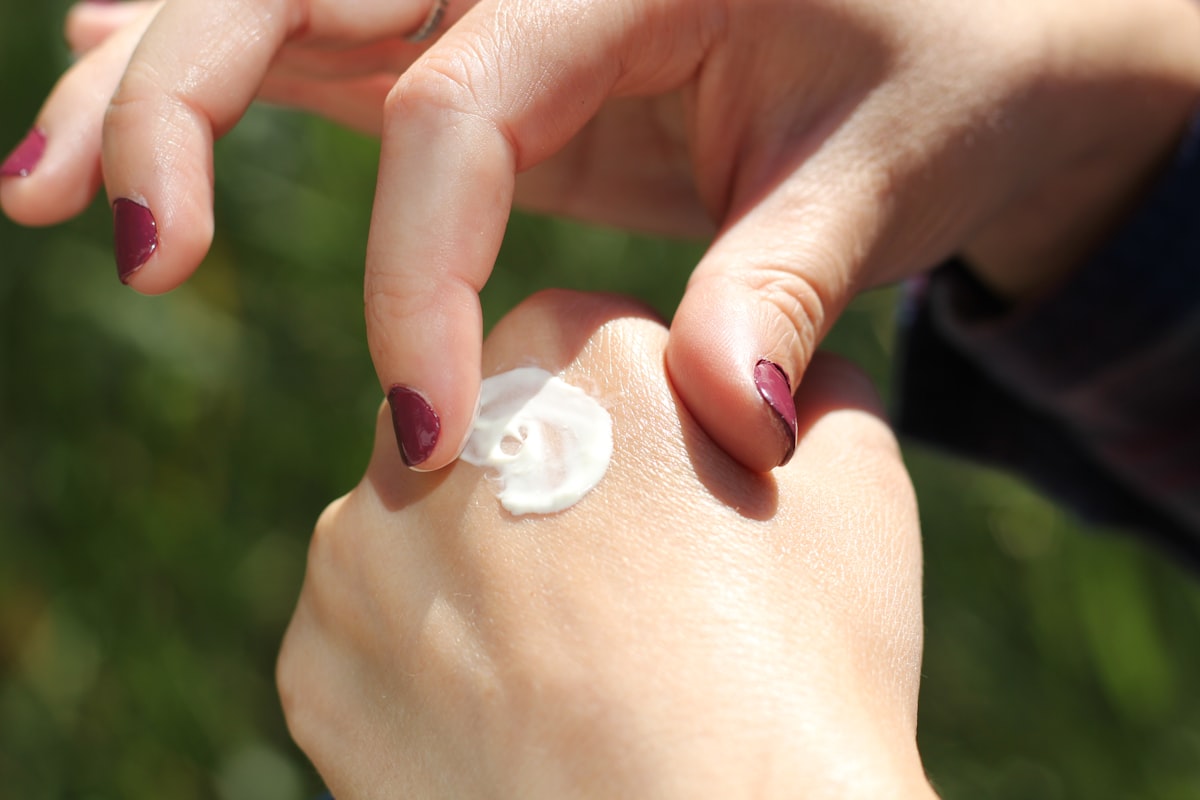
There is a Japanese sunscreen I keep on my desk, not on my shelf, because I like to watch it work. You warm a drop on the back of the hand and it sits there like water that forgot to run off, and then, when your skin gets warm, it does the strange thing it is built to do: it sets harder. Anessa, made by Shiseido, is engineered around what the brand calls its Auto Booster, a film that grows more uniform when it meets heat, sweat, and the moisture in the air. Reviewers and retailers who track the Japanese market, among them NANA MALL, rank it as Japan's best-selling sunscreen by retail value, a spot it is reported to have held since 2014. I have used cheaper ones, Kao's Biore UV Aqua Rich among them, that vanish just as cleanly. What they share is the thing I have come to think of as the whole Japanese argument: the pleasure is in the wearing.
For most of the last ten years the beauty story I was sent to write was Korean, and it moved fast. K-beauty taught the world the ten steps, then taught it to be tired of the ten steps. Now the desks that once ran breathless K-beauty explainers are running J-beauty ones. Marie Claire, in a piece this year, framed Japanese skincare as a reset after years of ingredient overload, preventative rather than corrective, a philosophy where products are used as much as they are bought. The facial sculptor Joome Song, who is of Korean heritage but grew up in Japan, told the magazine that J-beauty rests on three pillars, "simplicity, consistency, and harmony between one's inner and outer self." The aesthetic doctor Alicia Gonzalez put the demand side more plainly in the same piece: patients are tiring of complex, multi-step routines.
I want to be careful here, because I am Korean and I have a stake, and because "slow versus fast" is exactly the kind of clean binary that beauty marketing loves and that flattens two rich traditions into a mood board. So let me point at the thing underneath the vibe, which is regulation.
Japan sorts beauty products into two legal boxes. There are cosmetics, which may only make mild claims, and there are quasi-drugs, iyakubugaihin, marked on the box as 医薬部外品 or 薬用. A quasi-drug is defined under the Pharmaceuticals and Medical Devices Act as a substance with mild effects on the body and a specific function, sitting in the space between a drug and a cosmetic. The practical difference is not vibe, it is paperwork: as the regulatory summaries at ChemLinked lay out, a quasi-drug must contain an active ingredient approved by the health ministry at a set concentration, and it needs pre-market approval before it can be sold, where an ordinary cosmetic only has to be notified. Whitening, anti-aging, anti-acne, the strong words, live on the quasi-drug side of the fence. This is why the Japanese word for a serum that actually claims to do something feels heavier than the Western "cosmeceutical," which, ChemLinked notes, has no legal basis at all.
That rigor is exactly what the fast lane is now bumping into. Lauren Lee, who founded the brand Jelly Ko and the consultancy STYLE STORY, argued in comments reported by Cosmetics Design Asia that K-beauty is moving into a mature, consumer-led phase. In that account she flagged the ingredients racing ahead of it, PDRN (the salmon-DNA repair ingredient) and growth factors, everywhere in the marketing now, making repair-and-regeneration claims that in her reading sit in quasi-drug territory while the rules lag behind. Two systems, two speeds. One invents the word first and lets the regulator catch up. The other makes you prove the word before you can print it.
You can see where the two meet on the counter. When @cosme, Japan's enormous review platform, handed out its 2025 Best Cosmetics Awards in November, the tally was reported at nearly 1.5 million user reviews across more than 52,000 products, and the base-makeup winners were not bold color but "filter skin," glow cushions and luminous powders that read as skin with the volume turned up half a notch. Lee sees the same drift toward hybrids that work harder, cushions and tinted sunscreens and one-and-done products that fold treatment, coverage, and SPF into a single pass. It is minimalism, yes, but minimalism as compression, not renunciation.
Here is where my Korean loyalty and my Japanese admiration stop arguing. The gesture is not decoration. When Song describes the press of a warm palm, or when the Anessa film knits itself together in the heat of your face, the application is doing real work, the same work my grandmother's ten unhurried minutes of cold cream did above the market in Daegu. A cream that feels like a small kindness gets used every night, and consistency is the only place skin actually changes. J-beauty did not discover this. It just never stopped believing it, and wrote it into the law, and now, happily, the rest of us are slowing down enough to feel it. You will hear a good sunscreen before you see it, a small wet give as it breaks, and then nothing, which is the whole trick.